
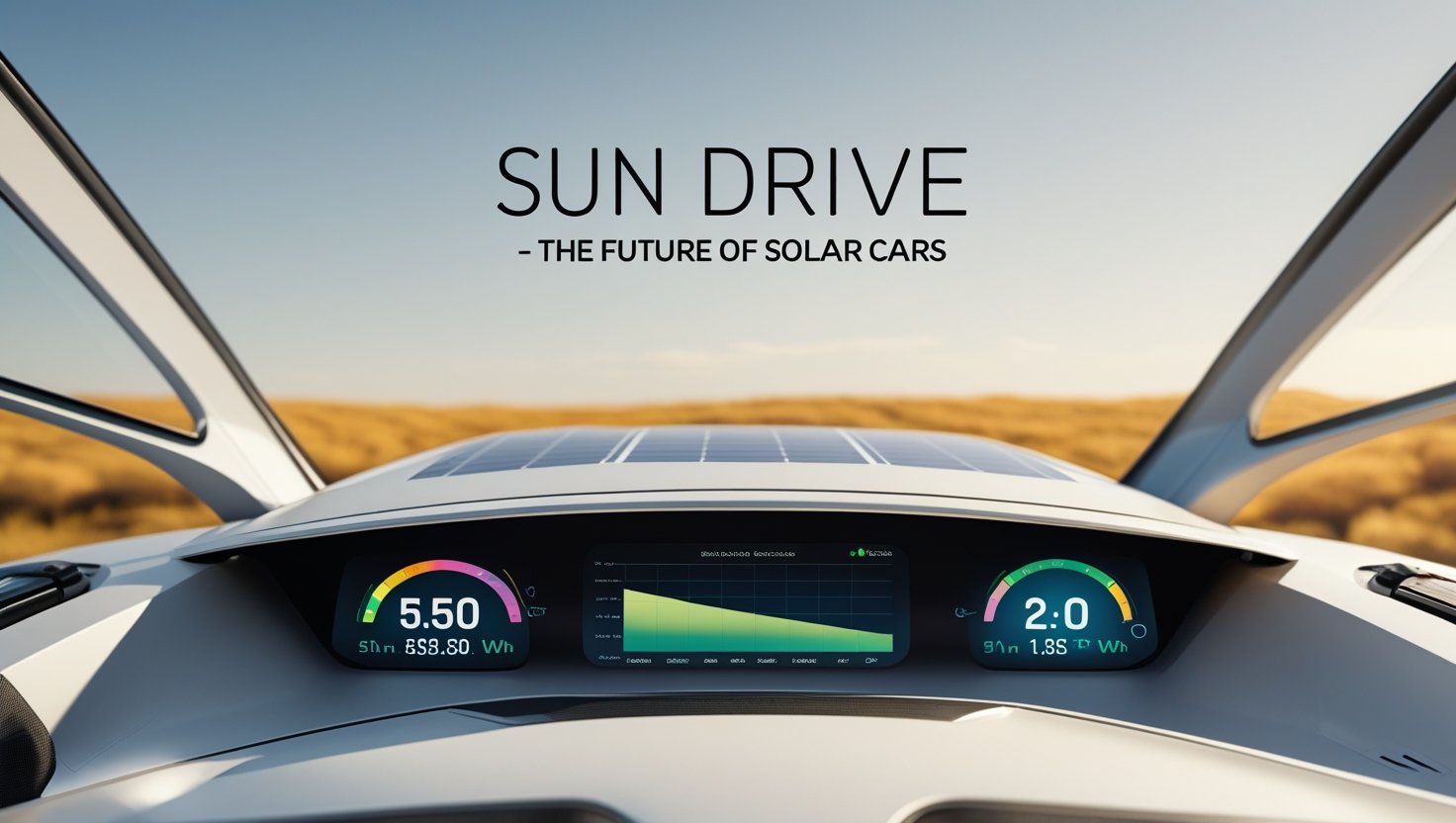
The world of cars stands at the edge of a great change. We see a future where vehicles move without burning fuel. Solar cars, known as Sun Drive, promise to fix many big problems with how we travel. They aim to cut down on pollution and use less harmful energy. Think about a car that fuels itself just by being outside. A car that barely needs a charging cord. Could such a truly self-sufficient vehicle reshape our daily commutes and trips?
The Science Behind Solar Cars:
How Solar Panels Integrate into Vehicle Design:
Solar cell technology has come a long way. Early cells were clunky and not very strong. Now, solar panels for cars are thin and tough. They can even bend to fit a car’s curves.
These car-grade solar panels must be very good at turning sunlight into power. They also need to last a long time, standing up to weather and road bumps. Engineers make cars sleek so more sun hits the panels. This special design helps the panels soak up maximum light. New, light materials help keep the car’s total weight low. This is important for saving energy.
Energy Storage and Battery Technology:
Solar cars gather energy when the sun shines. But what happens when it’s cloudy or dark? That’s where advanced batteries come in. They store the sun’s power for later use.
New battery types, like solid-state ones, hold more power. They are also safer than older kinds. Most solar cars will use a mix of solar charging and plug-in charging. This gives drivers options. Plus, a clever feature called regenerative braking adds power back to the battery. It uses the energy from slowing down to help extend how far the car can go.
Performance and Practicality:
People often wonder how fast solar cars can go or how far they can travel. Modern prototypes show good speed and quick acceleration. Their range keeps getting better, too. You can drive these cars every day.
Real-world tests show how far a solar car can travel on a full charge. These numbers look good. Charging from the sun takes time, but it happens while you park. Traditional chargers can fill the battery much faster if you need a quick boost. Cloudy days or long nights will reduce how much a car charges itself. So, the weather definitely plays a role in how much sun power your car gets.
Innovations and Leading Companies in Solar Car Technology:
Groundbreaking Prototypes and Concepts:
Many exciting solar car projects are pushing boundaries. These designs often show new ways to use solar power. They highlight what is possible.
Lightyear One, for example, aimed for super long-range driving. It has five square meters of solar panels built into its body. Aptera’s unique shape cuts through the air with little drag. This helps it go very far on less power. Sunswift from university teams often breaks speed records. These race cars show the power that tiny solar cells can produce.
The Business Landscape: Startups and Established Automakers:
Many companies are now jumping into solar car research. Some are small, quick startups. Others are big, well-known car makers.
Sono Motors, a startup, focuses on making solar affordable for many people. Their design allowed the car to charge from the sun daily. Hyundai and Kia have added solar roofs to some of their current models. This adds a little extra charge to the battery. The market for solar vehicles is just beginning to grow. We see more investment in this green future.
Expert Insights and Future Projections:
Experts are watching solar car growth closely. They see both big challenges and huge wins ahead.
“Getting enough power from solar panels on a car is tough,” said a leading solar engineer. “But new materials are making huge breakthroughs.” Another market analyst added, “Once costs come down, solar cars could become a common sight. People want to cut fuel bills and help the planet.” Many believe solar technology will blend more into all kinds of transport. Cars, buses, and even delivery vans may soon have solar parts.
Challenges and Hurdles to Widespread Adoption:
Cost and Affordability:
Right now, making solar cars costs a lot of money. The special materials and ways of building them are still expensive. This makes the final price higher for buyers.
High-efficiency solar panels built for cars are pricey to produce. These cars cost more than regular electric cars. They are much more expensive than gas cars. Governments might offer tax breaks or other help to make solar cars cheaper. Such steps could help more people buy them.
Durability, Maintenance, and Repair:
Solar panels on a car need to be tough. They face rain, hail, dirt, and strong sun every day. This can wear them down over time. Keeping the panels clean is important too.
Finding places to fix solar panels on cars might be hard at first. Not every auto shop knows how to work on them. Parts for these special systems may also be hard to get. Buyers will want to know how long the solar parts are guaranteed to last. This gives peace of mind about repair costs later on.
Regulatory and Infrastructure Considerations:
New laws and rules are needed for solar cars. These laws make sure the cars are safe to drive. They also set up how the cars get approved for roads.
Existing charging stations might not be built with solar cars in mind. The way cities are planned needs to change, too. We need places where cars can park and soak up sun without issue. Smart city planning could help solar cars fit into daily life better.
The Environmental and Societal Impact of Solar Cars:
Reducing Carbon Footprint and Air Pollution:
Solar cars could greatly help our planet. They produce zero emissions while driving. This means less carbon is going into the air. Less dirty air makes cities healthier places to live.
Comparing a solar car’s full life, from making it to driving it, shows fewer carbon releases. This is better than cars that use gas or even coal-powered electricity. Cleaner air in cities helps everyone breathe easier. The car industry is a big source of planet-warming gases. Solar cars offer a path to change that.
Energy Independence and Grid De-congestion:
Imagine not needing gas stations or even charging stations as much. Solar cars move us toward using less fossil fuel. This makes countries more energy independent. They don’t rely so much on outside sources for power.
Solar cars could even help power homes sometimes. This is called vehicle-to-grid, or V2G, technology. Your car could send power back to the house during peak times. This eases strain on the local power grid. It’s like having many small power plants moving around.
The Future of Mobility:
Solar cars fit perfectly into smart cities of tomorrow. They could be part of a larger network of clean energy. They help build transport systems that do not harm the Earth.
These cars could work with other renewable energy sources, like wind power. This creates a fully green way to live and move. Making solar cars common means more people can access clean transport. It makes a healthier world for everyone.
Conclusion:
Solar cars hold amazing promise. They offer a cleaner, greener way to get around. These Sun Drive vehicles could even become self-sufficient, relying on the sun’s free energy. This changes how we think about daily travel. Despite the hurdles, new ideas keep coming. Engineers and designers work hard to make solar cars better and cheaper. Their efforts are pushing us toward a future where our roads are silent and clean. The sun will fuel our journeys.
FAQs:
1. How do solar cars work?
Solar cars use panels on their surface to convert sunlight into electricity, which powers the vehicle or charges its battery for later use.
2. Can a solar car run only on sunlight?
Most solar cars combine solar charging with plug-in options. While sunlight can provide power, cloudy days and long drives may still require traditional charging.
3. Are solar cars available for purchase today?
Some early models and prototypes exist, but mass-market solar cars are still in development. However, major automakers are exploring solar technology in upcoming vehicles.
4. How far can a solar car travel on a sunny day?
It varies by model, but solar cars can add 10–70 km per day just from sunlight. Advanced models can travel much farther when fully charged.
5. Are solar panels on cars durable?
Yes. They are designed to withstand weather, heat, and road wear. Still, regular cleaning and occasional maintenance help keep them efficient.
6. What are the biggest challenges for solar cars today?
High manufacturing costs, limited infrastructure, and the need for better battery storage are key hurdles, but progress is happening quickly.