
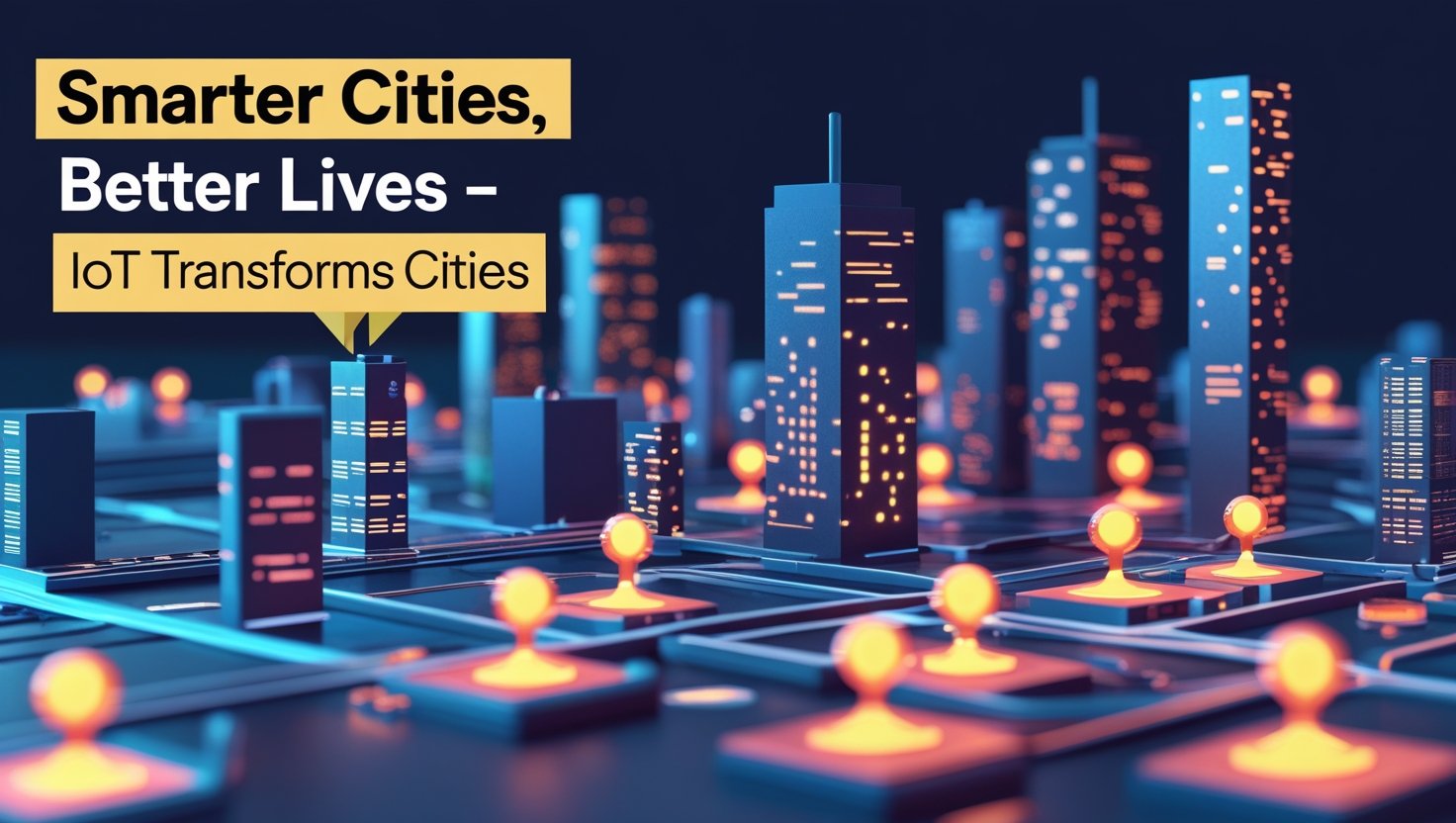
Imagine walking through a city that anticipates your needs before you even realize them. Where traffic lights adjust to your commute, air quality sensors alert you to cleaner routes, and public services respond instantly to community demands. This isn’t science fiction; it’s the reality of how IoT transforms cities into intelligent ecosystems that create smarter cities and better lives for millions of urban dwellers. The Internet of Things has evolved from a technological buzzword into the digital nervous system that powers modern urban innovation, weaving connectivity into every aspect of city life to deliver unprecedented quality of living, sustainability, and efficiency.
The Urban Intelligence Network:
The foundation of how IoT transforms cities lies in creating an interconnected web of intelligent devices that function as the city’s sensory system. Unlike traditional urban infrastructure that operates in isolation, smarter cities deploy thousands of connected sensors, cameras, and monitoring devices that communicate continuously, creating a real-time understanding of urban dynamics.
This urban intelligence network enables cities to process information at unprecedented scales, analyzing everything from pedestrian traffic patterns to energy consumption fluctuations. The Internet of Things creates a city-wide brain that learns from daily operations, identifies inefficiencies, and automatically adjusts systems to optimize performance without human intervention.
Modern smarter cities utilize edge computing at the neighborhood level, processing data locally to make split-second decisions that improve daily life. This distributed intelligence architecture ensures that IoT transforms cities into responsive environments that adapt to changing conditions faster than any human operator could manage.
The City as a Living Organism:
Understanding how IoT transforms cities requires viewing urban areas as living organisms with complex metabolic processes. Smarter cities monitor their resource flows, water, energy, waste, and information, like biological systems tracking nutrients and oxygen through circulation networks.
The Internet of Things enables cities to develop sophisticated metabolic awareness, measuring resource consumption patterns and identifying optimization opportunities that reduce waste while improving service delivery. This biological approach to urban management creates smarter cities, better lives by ensuring resources flow efficiently to where they’re needed most.
Advanced IoT sensors track the city’s metabolic health indicators, from air quality and noise levels to energy efficiency and water usage patterns. This continuous monitoring creates feedback loops that help cities maintain optimal performance while minimizing environmental impact, demonstrating how IoT transforms cities into sustainable ecosystems.
Citizen-Centric Urban Orchestration:
The most revolutionary aspect of how IoT transforms cities involves shifting from infrastructure-centered to citizen-centered urban management. Smarter cities use Internet of Things technologies to understand individual and community needs, creating personalized urban experiences that adapt to diverse population requirements.
IoT platforms collect anonymized data about how citizens interact with city services, public spaces, and transportation systems. This information enables urban planners to design smarter cities, better lives by optimizing service delivery based on actual usage patterns rather than theoretical models.
Citizen engagement platforms powered by IoT create two-way communication channels between residents and city management. This real-time feedback system ensures that smarter cities respond quickly to community concerns while providing residents with transparency about how their input influences urban development decisions.
Predictive Urban Wellness:
IoT transforms cities by enabling predictive wellness systems that identify and address urban health challenges before they become critical problems. Smarter cities deploy environmental monitoring networks that track air quality, water purity, noise pollution, and other factors that influence public health outcomes.
The Internet of Things enables cities to create health-promoting environments by automatically adjusting lighting, ventilation, and green space management based on real-time wellness indicators. This proactive approach to urban health creates smarter cities, better lives by preventing health issues rather than just treating symptoms.
Advanced IoT health monitoring systems integrate with urban planning to identify areas where environmental improvements could significantly impact community wellness. This data-driven approach to public health demonstrates how IoT transforms cities into healing environments that actively promote resident well-being.
Economic Renaissance Through Connected Commerce:
The transformation of urban economic ecosystems represents a crucial way IoT transforms cities into thriving commercial environments. Smarter cities leverage Internet of Things technologies to create seamless connections between businesses, consumers, and municipal services that stimulate economic growth.
IoT-enabled business districts use real-time analytics to optimize foot traffic flow, parking availability, and public event scheduling to maximize commercial opportunities. This coordinated approach to economic development shows how smarter cities, better lives emerge through strategic technology integration that benefits both businesses and residents.
Local commerce platforms powered by IoT connect neighborhood businesses with community members through location-based services, event notifications, and resource-sharing systems. This hyper-local economic connectivity demonstrates how IoT transforms cities by strengthening community bonds while supporting local economic prosperity.
Cities That Adapt and Survive:
Modern urban resilience depends on how effectively IoT transforms cities into adaptive systems capable of responding to unexpected challenges. Smarter cities use Internet of Things networks to monitor infrastructure health, predict maintenance needs, and coordinate emergency responses with unprecedented efficiency.
The Internet of Things enables predictive maintenance systems that identify potential infrastructure failures before they occur, reducing service disruptions and extending asset lifespans. This proactive approach to infrastructure management creates smarter cities, better lives by ensuring reliable access to essential services.
Emergency response systems powered by IoT coordinate between multiple agencies during crisis situations, providing real-time information that enables faster, more effective responses. This interconnected emergency management demonstrates how IoT transforms cities into resilient communities that protect residents during challenging circumstances.
Cities as Climate Champions:
The environmental impact of how IoT transforms cities extends far beyond energy efficiency to encompass comprehensive climate action strategies. Smarter cities use Internet of Things technologies to monitor, measure, and minimize their environmental footprint while creating healthier living conditions.
Carbon footprint tracking systems powered by IoT provide real-time emissions data that enables cities to make informed decisions about transportation, energy usage, and industrial activities. This environmental awareness creates smarter cities, better lives by ensuring urban development supports rather than compromises planetary health.
IoT-enabled urban forests and green infrastructure systems optimize plant health, water usage, and carbon sequestration through precision environmental management. This integration of technology with natural systems shows how IoT transforms cities into environmental stewards that actively contribute to climate solutions.
The Future of Urban Intelligence:
The evolution of how IoT transforms cities continues accelerating as artificial intelligence, 5G networks, and quantum computing integrate with existing urban systems. Smarter cities of the future will feature autonomous infrastructure that manages itself while continuously improving service delivery and resource efficiency.
Advanced Internet of Things platforms will enable cities to simulate different development scenarios and predict long-term outcomes before implementing changes. This predictive urban planning capability will ensure that smarter cities, better lives, become increasingly attainable as technology sophistication grows.
The integration of IoT with emerging technologies like augmented reality and blockchain will create new possibilities for citizen engagement, service delivery, and urban governance that we can barely imagine today. This technological convergence demonstrates how IoT transforms cities into platforms for continuous innovation and improvement.
Conclusion:
The journey toward smarter cities, better lives, through how IoT transforms cities represents one of the most significant technological and social transformations of our time. The Internet of Things has evolved from connecting simple devices to orchestrating complex urban ecosystems that respond intelligently to human needs while promoting sustainability and resilience. As cities worldwide embrace these technologies, we’re witnessing the emergence of urban environments that don’t just house people but actively enhance their quality of life through the thoughtful integration of digital intelligence with human-centered design. The future belongs to cities that think, adapt, and grow alongside their residents, creating communities where technology serves humanity’s highest aspirations.
FAQs:
1. What is IoT, and how does it make cities smarter?
IoT connects devices and sensors throughout cities to collect data and automate services for improved efficiency.
2. How do smart cities improve residents’ quality of life?
Smarter cities optimize traffic, reduce pollution, enhance safety, and provide better public services through IoT technology.
3. Are smart cities secure from cyberattacks?
IoT transforms cities with advanced cybersecurity measures, but ongoing vigilance and updates are essential for protection.
4. How much do smart city technologies cost to implement?
Smarter cities require significant initial investment, but IoT systems typically pay for themselves through efficiency gains.
5. Can existing cities be transformed into smart cities?
Yes, IoT transforms cities gradually through strategic upgrades to existing infrastructure rather than complete rebuilds.
6. What privacy concerns exist with smart city IoT systems?
Smarter cities, better lives depend on balancing data collection benefits with robust privacy protections and transparent policies.